RTHS health scanner Stay in touch
RTHS · Gothenburg · Cuffless and continuous

Your blood pressure has a pattern.
Now it can be read.

We read blood pressure from the body without a cuff, often enough to follow one person through an ordinary day. What that makes possible is the part we are building now.

Stay in touch Read on ↓
The idea

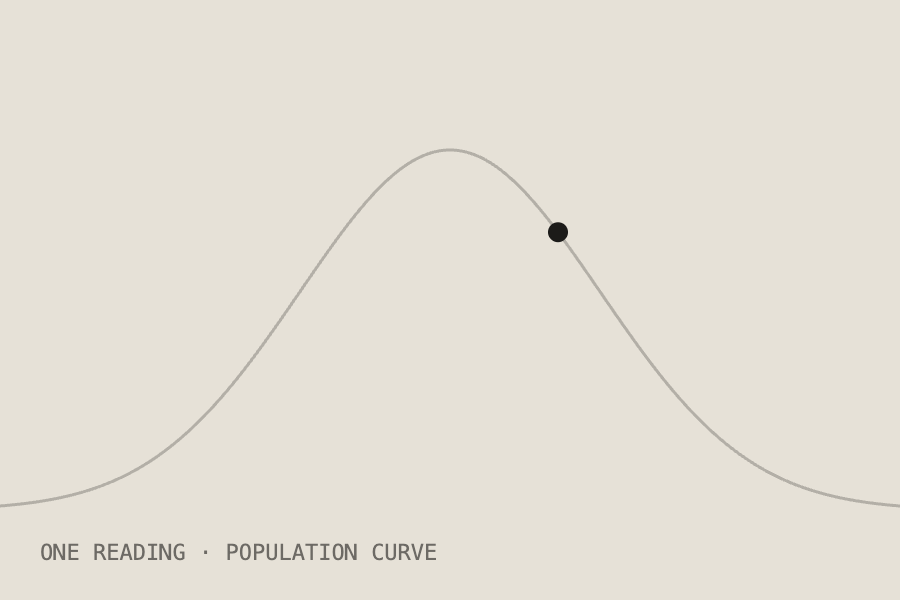
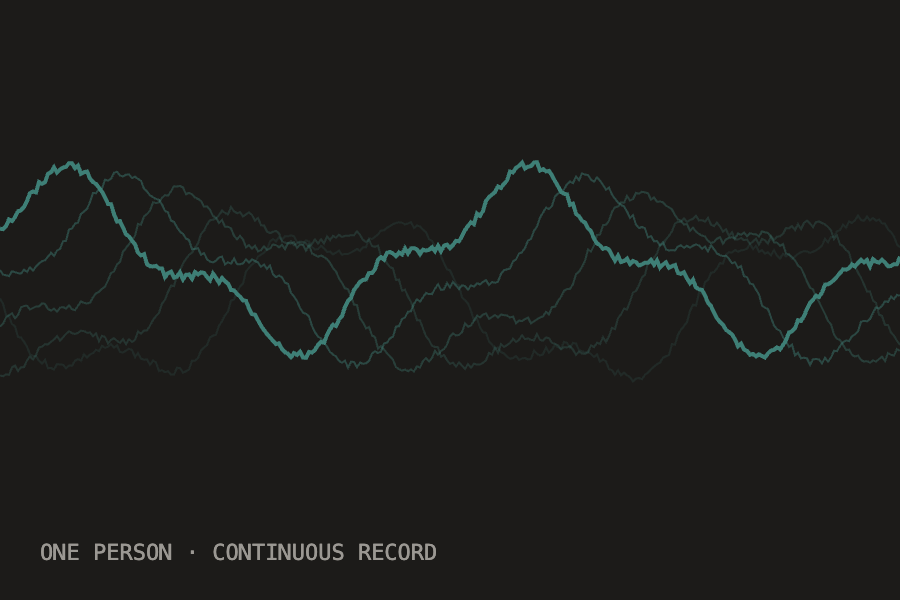
A cuff gives you one number and compares it to everyone else. We take many readings, while you live, and compare them to you.

A single reading plotted against a population bell curve
ThenOne reading, once a year.
Layered continuous signal traces of one person
NowYour own line, every day.
Migraine

What if you knew a few hours before?

One in seven people get migraines. Many can feel one building. Blood pressure appears to be part of what they are feeling, and until recently nobody could measure it in those hours, because nobody is in a clinic when a migraine arrives.

We can measure it there now. That is where we are pointing this first.

The migraine work →
Continuous blood pressure trace showing a rise before a migraine attack
One person, one week. The dots are the cuff.
How it started

It began as a COVID scanner. It didn't stay one.

In 2020 Roy Forslund was running Ortoma, a Gothenburg company making planning software for orthopaedic surgeons. Then elective surgery stopped, travel stopped, and Ortoma's plans to grow abroad stopped with them.

A different question took over: if nobody can meet because nobody can tell who is ill. Could a machine tell, quickly, at the door? Roy took it to Qamcom, a deep-tech house in the same city built around signal processing, and together they built a hand scanner that read several vital signs in a few seconds.

The pandemic faded. What the scanner could read from a hand turned out to include blood pressure, and once you can read that without a cuff, you can read it often. That is what RTHS does.

People

Three people and a deep-tech house, in Gothenburg.

Founder
Roy Forslund

Started RTHS in 2020 after COVID put Ortoma's expansion on hold.

Medical
Tommy Hansson, MD

Physician, professor emeritus, University of Gothenburg. Co-founder of Ortoma.

Engineering
Thomas Petig, PhD

Signal-processing engineer. Years on radar before turning the same tools on the body.

Technology partner
Qamcom

A research and technology partner that turns deep-tech research into products and companies, with signal processing at its core. They built the system, hardware and software, with us from the first prototype onward.

Their write-up →
Launching soon

We'll tell you when there's something to try.

Leave an address. If you get migraines, treat people who do, or make things that sit on the body, say so. We'd like to talk sooner.